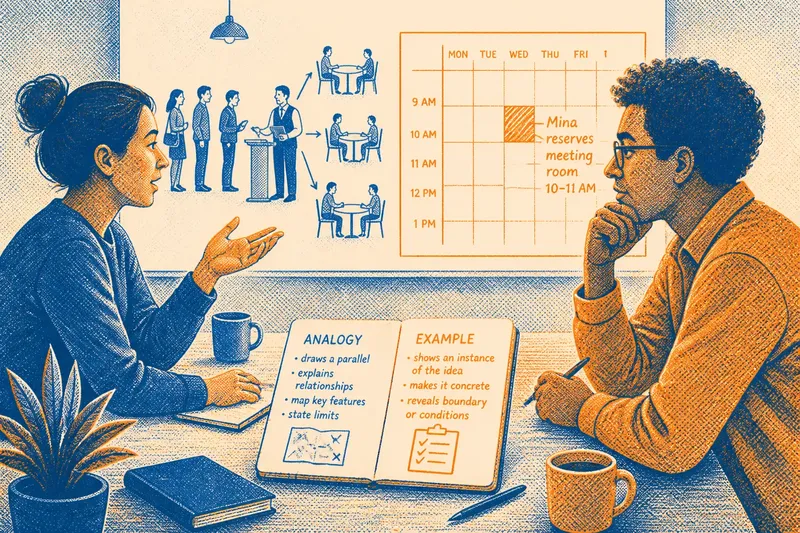
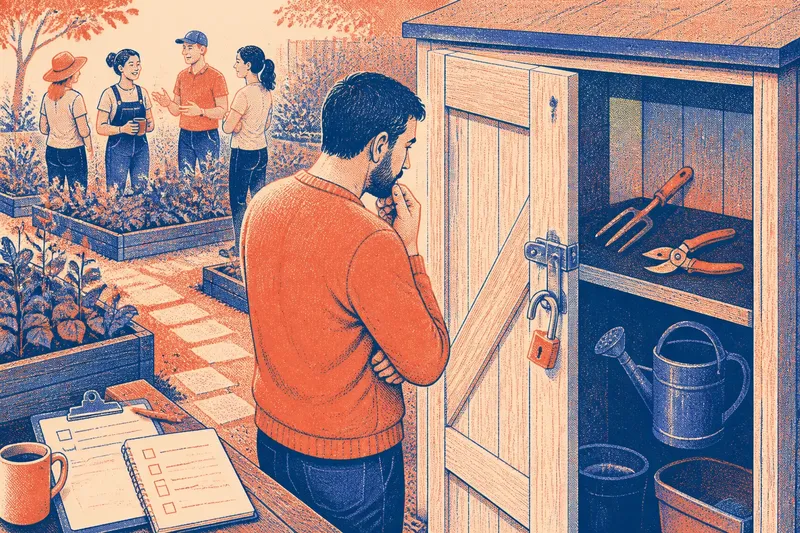
The Question Hidden Inside a Familiar Claim
Turn a familiar claim into a precise question, expose its assumptions and identify what evidence or judgement could help you make a sound decision.
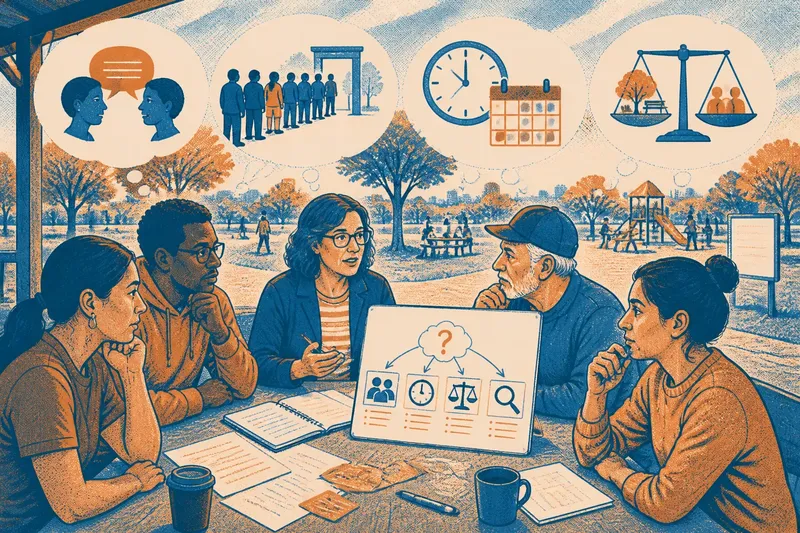
The common mistake with a claim such as “people are less patient than they used to be” is to argue over whether it is true before asking what “patient” means. That can waste a conversation on different standards: one person may mean waiting quietly, another tolerating uncertainty. Turning a familiar claim into a precise question makes its terms and limits easier to examine.
This is not a trick for proving a claim right or wrong. It is a way to separate the questions bundled inside it, then decide what information is missing and what remains a matter of judgement.
Find the hidden question
A claim states or implies that something is true: “the new timetable is better”, “children spend too much time indoors”, or “this neighbourhood has changed”. Each invites agreement or disagreement, but none says exactly what would count as a good answer.
Translate the claim into a question without changing its subject. “The new timetable is better” might become “Does the new timetable help people arrive when they need to?” That is only one possible reading: “better” could also mean easier to remember, less tiring or more reliable.
Ask what the claim is comparing. “Better than what?” might mean better than the previous timetable, another possible schedule, or an ideal that has never been tried. If the comparison stays hidden, people can reach different verdicts while talking past one another.
Set clear boundaries
Words such as “better”, “safe”, “successful” and “too much” carry judgement but leave the standard unclear. They are not meaningless; they need a context. Ask what the word means in this claim rather than demanding a universal definition.
For “people are less patient”, possible meanings include interrupting more often, leaving queues sooner or feeling frustrated by delays. These signs are not interchangeable. Someone may tolerate a long wait but dislike not knowing how long it will last.
Time words need boundaries too. “Used to” could refer to a person’s earlier life, a previous generation or a recent workplace change. Name the period and group under discussion, and avoid treating one person’s memory as a description of everyone.
Make the question as specific as the decision requires. A discussion about a queue at a local clinic may call for a question about that setting. A claim about public behaviour generally needs a broader basis than one queue can provide.
Separate claim types
Broad claims often blend description, explanation and evaluation. “People are less patient because everything is immediate now” alleges a change, suggests a cause and implies that the change is undesirable. Each part needs a different question.
- Description: What behaviour is said to have changed, among whom and over what period? If those details are missing, clarify them before judging the claim; if they are already clear, move on to possible explanations.
- Explanation: What might have contributed to the change, and what other causes could fit? If several explanations remain plausible, keep them open; if one is being proposed, ask what evidence would distinguish it from the alternatives.
- Evaluation: Why would the change count as a problem, and for whom? If people value the outcome differently, discuss those priorities; if they share a standard, use it to assess the consequence.
- Scope: Who does “people” mean, and where does the claim apply? If the evidence covers only a particular group or place, limit the claim to that scope; if it is intended to apply more broadly, ask what further support is needed.
Keeping these questions apart prevents an appealing explanation from being mistaken for proof that a change happened. It also stops disapproval from doing the work of description. A behaviour can be frustrating without being more common than before.
Match evidence to questions
Once the question is clearer, ask what information could bear on it. To assess whether people interrupt more, accounts of conversations or observations in comparable settings may be relevant. A poll about whether people feel patient concerns self-perception instead; it does not directly establish how often they interrupt.
Check whether the evidence concerns the same people, behaviour, setting and period as the question. A vivid story can suggest something worth asking, but one story does not automatically support a claim about a whole community.
Ask what answer would change your mind. If no possible observation could count against the claim, it may be a personal impression or value judgement rather than a claim that can be checked in the usual way. That changes what kind of discussion is useful; it does not make the impression worthless.
Some questions need judgement as well as evidence. “Is this amount of waiting acceptable?” cannot be settled by counting minutes alone: people may weigh predictability, urgency and fairness differently. Evidence can clarify the trade-offs, while the final judgement depends on which considerations matter to those affected.
Questions about claims?
How do I find the hidden question?
Underline the main judgement word, such as “better” or “too much”, then ask what it compares or evaluates. Put the answer into a direct question and check that it still concerns the original subject.
Does a precise question remove bias?
No. A question may still assume that a change occurred, omit a group or treat one outcome as more important than another. Precision makes those choices easier to inspect; it does not remove them.
What if people mean different things?
Offer two plausible readings and ask which one the speaker intends. “Better” might mean more convenient or more reliable, and those standards could point in different directions.
When is an impression enough?
An impression can explain how someone feels or why a topic matters to them. If it is being used to describe a wider pattern or justify a decision, ask what further support that broader use needs.
Work through one claim
Say a residents’ group says, “The new park rules are unfair.” The word “unfair” might refer to who is affected, whether the rules are applied consistently or whether people have a reasonable chance to use the park. Those concerns overlap, but they call for distinct questions.
Imagine the group has received two complaints about people being asked to leave the park. The members write down the starting information: the complaints identify no dates, users or reasons for enforcement. First, they ask, “Are the rules applied consistently to different park users?” Their immediate answer is that the complaints are not enough to tell; they need accounts that identify comparable situations and how staff responded.
Next, they ask, “Do the rules restrict one group’s access more than others’?” They decide to compare which users are affected and what access the rules allow, rather than treating the two complaints as representative. The resulting answer is still limited: they can identify what information is missing, but cannot yet settle whether the rules are unfair overall. That judgement may also depend on the rules’ purpose and the needs they are meant to serve.
This process shows why a disagreement can persist even when everyone has heard the same facts: people may be answering different questions or applying different standards. Making those differences explicit gives the discussion a clearer next move.
Keep questions open
A precise question can still be loaded. “Why do people refuse to follow sensible rules?” assumes the rules are sensible and frames non-compliance as a refusal. “What factors affect whether people follow these rules?” leaves room for confusion, practical barriers, disagreement and deliberate choice.
There is a trade-off between openness and focus. A question that is too broad invites unrelated answers; one that is too narrow can rule out relevant explanations. Start with a focused version, then check whether it excludes a plausible answer that matters.
Questions can contain several assumptions at once. “Why are younger residents less considerate of neighbours?” assumes an age difference, defines a behaviour as inconsiderate and implies a cause. Check the intended behaviour first, then ask whether it differs between groups and what might explain any difference that is established.
In ordinary conversation, “What do you mean by ‘better’ here?” may be enough to reveal the standard. If the answer points to several standards, choose the one relevant to the decision and keep the others visible rather than blending them into a vague verdict.
Use precision sparingly
Not every casual remark needs to be cross-examined. The point is to notice when a claim is carrying more weight than its wording can support. If it expresses taste, treat it as taste; if it is being used to settle a dispute or guide a choice, ask for a clearer question.
Think of a claim as a parcel with no label: opening it carefully reveals what has been packed inside, but the contents may still need sorting. The question you uncover is not the answer; it is a better starting point.
When a familiar claim comes up, use its main judgement word to find the hidden question, then name the comparison, group or standard it depends on. That small change helps you decide whether the next move is to seek evidence, clarify a definition or discuss which values should guide the choice.